
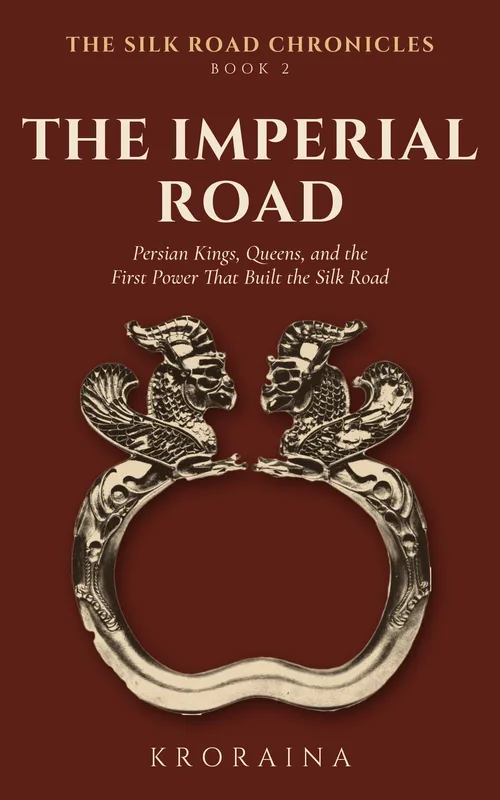
The Silk Road Chronicles · Book 2
The Imperial Road: Persian Kings, Queens, and the First Power That Built the Silk Road
Coming soon
Founded by Cyrus the Great and shaped by Darius, the Persian Empire ruled the heart of the ancient world for more than two hundred years, from 550 to 330 BCE.
From a small province in southern Iran, a tribe of shepherds rose to command the largest empire the world had yet seen, from Egypt and the Aegean to the borders of India.
Its Great Kings conquered, loved, schemed, and killed. They fought the Greeks for a hundred years, from Marathon to Salamis. Brothers fought to the death for the throne, and of the twelve kings, at least seven were murdered. An Assyrian scribe once gave the royal court a chilling name: the lion pit.
Its queens were no less formidable. They ran great estates, issued orders in their own names, and even decided who would wear the crown. To their enemies they showed no mercy: they mutilated, flayed, and poisoned.
The empire’s greatest legacy was its system. Adopted by Alexander the Great and inherited by the Parthians, it outlived the empire by centuries. Its highways ran for thousands of kilometers, with more than a hundred relay stations along the way. Satraps governed its provinces under the watch of the King’s Eyes and Ears. And from the Nile to Bactria, the Persians made Aramaic, a Semitic tongue, the language of government; its alphabet would give rise to the Kharoshthi and Sogdian scripts.
The second book of The Silk Road Chronicles, The Imperial Road tells the story of Persia’s great kings and queens, from the empire’s rise to the eve of its fall: the first power that built the Silk Road.